
What Traders Should Journal But Almost Nobody Does
June 21, 2026 · ~4 min read · Updated September 4, 2026 · by Shivam Kushwaha, HeyArtha founder
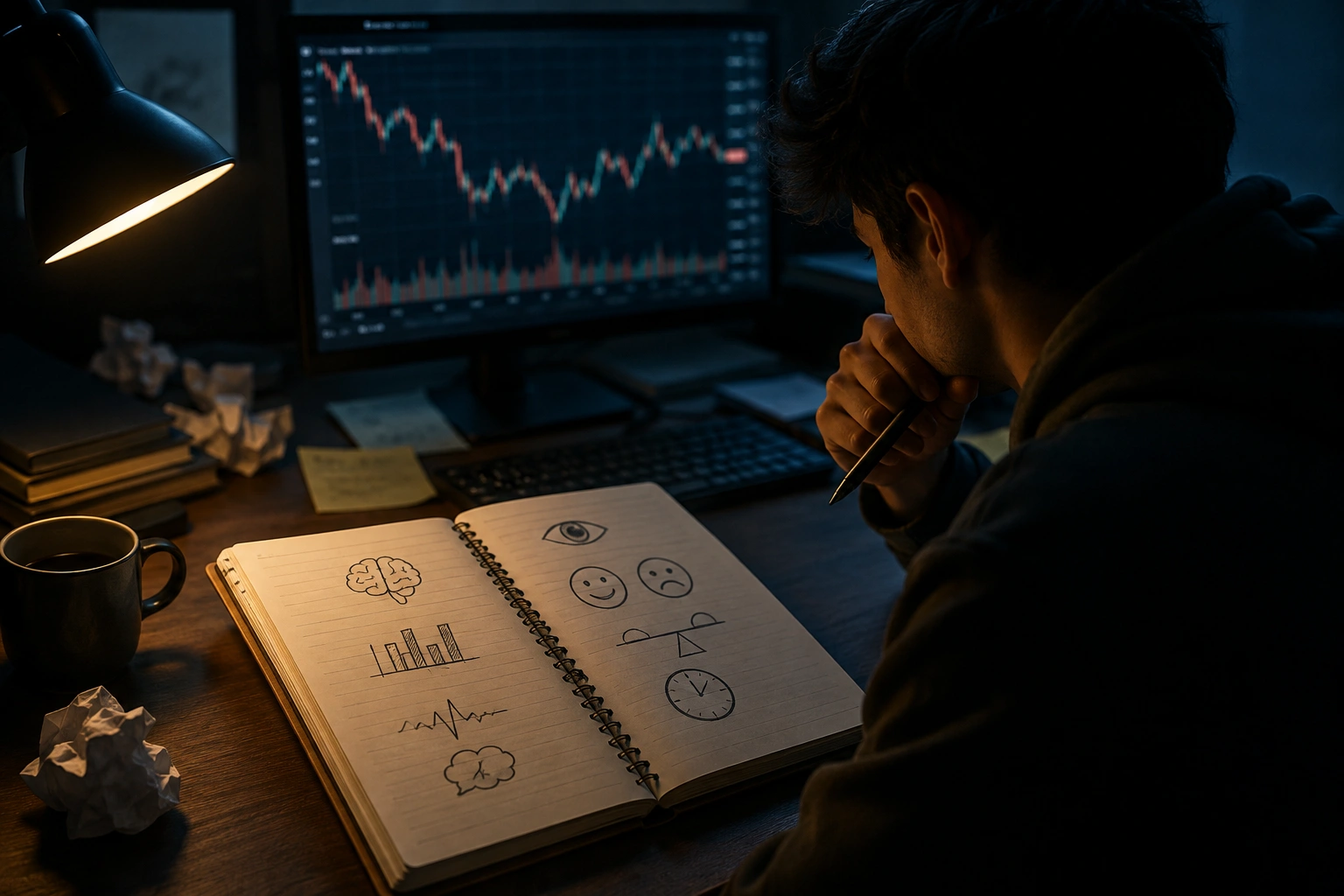
You downloaded the template. Entry price, exit price, position size, P&L, strategy tag — filled in diligently for about two weeks. Then a rough patch hit, the entries got shorter, and somewhere around day 30 the spreadsheet just stopped opening. It's still sitting in a folder, half-finished, like most trading journals eventually are.
Why journals die around the same point
The common pattern isn't laziness. It's that most journal templates only track what's easy to measure — entry, exit, size, P&L — and skip the part that actually explains why a trader keeps repeating the same mistake. Reviewing thirty rows of numbers doesn't tell you why you broke your own rule on trade #14. It just tells you that you did.
The field almost every template skips
The one addition that experienced traders consistently point to as the actual turning point isn't a new column of numbers. It's a short, specific note on the emotional state behind the trade — not "I was nervous," but the actual thought: "entered because I didn't want to miss it," or "held past my stop because I didn't want to admit I was wrong." That single line does more for behavior change than a hundred rows of P&L data, because it's the only part of the journal that shows the decision, not just the outcome.
Patterns like revenge trading, oversizing after a win, or holding a loser too long don't show up clearly in numbers alone. They show up in the repeated language of the emotional notes — the same phrase, "didn't want to be wrong," appearing across a dozen different bad trades, is a pattern no P&L column will ever surface on its own.
Why this specific field feels harder to fill in
It's uncomfortable in a way the numeric fields aren't. Writing "I was greedy" or "I panicked" about your own decision is a small daily confrontation with yourself, and most people quietly skip it, even while diligently filling in every other column. That avoidance is exactly why it matters most — the discomfort is usually pointing at the actual thing worth examining.
What actually helps this stick
Filling in the emotional note immediately after the trade, not at the end of the day, tends to work better — waiting even a few hours lets the mind smooth over what actually happened in the moment. Some traders find it easier to talk the entry out loud to someone first, then write it down, since saying "I revenge-traded because I was angry about the last one" to another person makes it much harder to soften into something more flattering on paper — a version of the same honesty that's hard to reach with someone who's never traded.
Where Artha fits into this
This is part of what Traders' Talk can add to a journaling habit — a place to actually say the uncomfortable version of a trade out loud to someone closer to the moment than a template ever gets, before it gets written down (or quietly left out) in your own notes.
The journal that actually changes something
A journal full of accurate numbers and empty emotional fields tells you what happened. A journal with the emotional notes filled in honestly tells you why it keeps happening — which is the only version that actually changes anything.
Quick answers
Things people usually want to know.
Why do most trading journals stop being used after a few weeks?
Most templates only capture measurable data like entries, exits, and P&L, which becomes tedious without clearly showing why mistakes keep repeating, so motivation to keep filling it in tends to fade.
What's the most important thing to include in a trading journal beyond the basic numbers?
A short, honest note on the emotional reasoning behind each trade — the actual thought in your head at the moment of the decision, not just how you felt afterward.
Why is it uncomfortable to write down the emotional reason behind a trade?
Because it requires admitting things like greed, fear, or stubbornness about your own decisions, which is a small daily confrontation most people instinctively avoid, even while filling in every other field diligently.
Should I fill in the emotional notes right after a trade or at the end of the day?
Right after tends to work better — waiting even a few hours allows the mind to smooth over or rationali
More from HeyArtha
Other things we've been writing about.
Brokerage & Tax on Trading Income in India (2026 Guide)
What Zerodha actually charges, how STT changed in 2026, and how F&O, intraday and delivery profits are taxed, in a real numbers breakdown.
Budget Day Brain: Why Feb 1 Turns Disciplined Traders Reckless
Union Budget day making your trading brain go haywire? Heres an honest look at the psychology of high-volatility event days, no calls, just the mindset.
What the CFA Charter Actually Gets You in India: A Realistic View
₹32.4 lakh average for recent charterholders, ₹66.6 lakh overall. Heres what those numbers actually mean, and what they dont.