Post-Diwali Comedown: When the Lights Go Out
October 26, 2026 · 9 min read · by Shivam Kushwaha, Artha founder
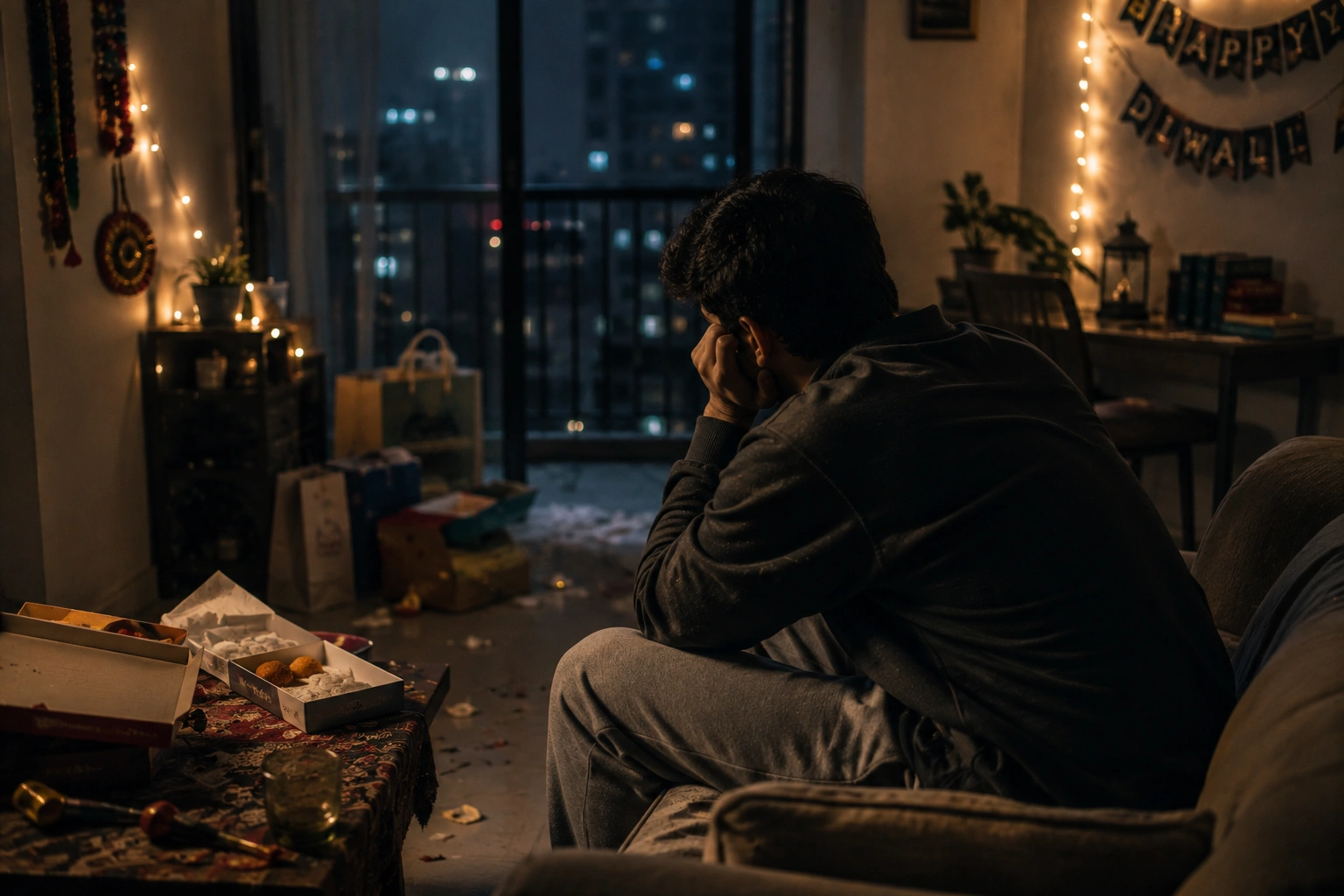
The diyas are still out on the balcony, half-burnt, nobody's gotten around to clearing them yet. The last box of sweets sits half-eaten in the fridge, getting slightly stale. Your cousins went back to their own cities two days ago, the group chat's gone quiet again, and the house that was full of noise and lights and people for almost a week now just feels ordinary. Not sad exactly, just flat, in a way that's strange to explain to anyone who'd ask why you seem a little off right after what's supposed to be the happiest week of the year.
Why the Days After Diwali Can Feel Strangely Empty
Here's the honest truth about the post-Diwali comedown: it's not really about missing the festival itself, even though that's the first explanation most people reach for. It's about the sudden drop from an unusually high emotional and social intensity, days packed with family, noise, sweets, lights, anticipation, back down to an ordinary Tuesday that, by comparison, feels almost eerily quiet. The contrast is what actually produces the low, not the absence of the festival on its own.
There's a real, well-documented pattern behind this. Psychologists who study post-holiday letdown describe it as a normal transition response, not a sign anything's wrong, driven by a mix of factors that pile up together, the emotional highs and lows of the celebration ending abruptly, genuine exhaustion after days of planning and socializing, and the jarring shift from a festive, elevated mood straight back into the grind of ordinary responsibilities (Psychology Today's overview of coping with post-holiday blues). None of that requires anything to have gone wrong during Diwali itself. Even a genuinely wonderful festival season can produce this exact letdown afterward, purely because of how sharp the contrast is between the celebration and the return to routine.
This tends to hit harder around Diwali specifically because of how much the festival concentrates into a short window, cleaning, decorating, family visits, gifts, gatherings, all compressed into roughly a week of unusually high activity and connection. That concentration makes the contrast on the other side sharper too, there's no gradual taper back to normal life, just a fairly abrupt stop once the last guest leaves and the decorations start coming down.
If muhurat trading added its own specific pressure during the festival itself, the comedown afterward can carry an extra layer, processing not just the general post-festival flatness everyone feels, but also whatever happened, or didn't, during that one symbolic trading hour everyone made such a big deal about.
What Makes This Specific Comedown Harder to Talk About
A lot of people feel genuinely confused by their own reaction here, because on paper there's nothing to complain about, the festival went fine, family visited, nobody's upset about anything specific. That confusion itself becomes part of the discomfort, feeling low without an obvious, nameable reason is harder to explain to yourself, let alone to anyone else, than feeling low after something clearly went wrong.
There's also a specific loneliness in the timing, the comedown usually arrives right as everyone else seems to be moving on without any apparent difficulty, back to work schedules, back to their own routines, seemingly unbothered by the same shift you're finding strangely hard to settle back into. That mismatch can make the flatness feel like a personal weakness rather than the ordinary, shared experience it actually is, mostly because nobody talks about it openly enough for you to realize how common it actually is.
Family visits ending specifically tend to carry their own weight here too, especially if you don't see certain relatives, cousins, or grandparents often outside of festival season. The house going quiet again isn't just a mood shift, it's a real, specific loss of company you don't get to have most of the year, and it's worth naming that loss honestly rather than dismissing it as an overreaction to "just" a festival ending.
This can be especially pronounced if you've moved to a different city for work or study and came back specifically for the festival. The days leading up to Diwali often carry a kind of anticipatory warmth, counting down to being back in a familiar house with familiar people, and the comedown afterward isn't just about the festival ending, it's about returning to a hostel room or a rented flat that suddenly feels a lot quieter than it did before you left it. That specific kind of loneliness, the gap between a full house and an empty one, tends to hit hardest in the first few nights back, exactly when everyone assumes you should already be settled back into your usual routine.
There's also a subtler version of this that shows up for people who host rather than travel, the ones responsible for cooking, cleaning, and organizing the gathering itself. For a host, the comedown often arrives tangled up with genuine physical exhaustion, and it can be harder to separate "I'm tired from days of hosting" from "I'm sad the house is quiet again," even though both are almost certainly true at the same time.
The Comparison That Makes It Sharper
Social media adds its own layer to this particular comedown, a feed still full of everyone else's Diwali highlights days after your own celebration has quietly wound down, new outfits, family photos, sweets, all curated and posted after the fact, creating a strange sense that the festival is somehow still going for everyone except you. Scrolling through that while sitting in your own suddenly quiet house tends to sharpen the flatness rather than ease it.
There's also a specific financial comedown that often layers on top of the emotional one, the aftermath of festival spending, gifts, new clothes, sweets, sometimes travel, becoming visible right as the excitement fades, which adds a practical, numbers-based low right alongside the emotional one. Neither one causes the other exactly, but they tend to arrive together, and untangling which part of the flatness is financial and which part is purely emotional is worth doing honestly rather than letting them blur into one vague, undifferentiated bad mood.
Work adds its own particular flavor of comedown too, walking back into a full inbox, deadlines that didn't pause for the festival, colleagues who took less leave than you did and are quietly a few days ahead on whatever's currently moving. That practical catch-up period, on top of the emotional flatness, can make the first week back feel doubly heavy, not just an internal mood shift but a genuine external pile-up that needs actual time and effort to work through.
If you're someone who tends to check in on everyone else's mood before your own, even during the festival itself, the comedown can arrive with a specific delay, you spent the actual holiday making sure everyone around you had a good one, and it's only once the house empties out and the attention is no longer on managing anyone else's experience that your own quiet flatness finally gets a chance to surface.
What Actually Helps
The most useful shift is simply naming the comedown for what it is, a normal, well-documented response to an intense celebratory period ending, rather than a sign that something's actually wrong with you or with how the festival went. That reframe alone tends to take some of the confusion and self-judgment out of the equation, even before anything about the actual mood has changed.
It also helps to build in a gentler transition back to routine, rather than expecting yourself to snap immediately from festival mode back to full productivity the next morning. A day or two of lighter expectations, less pressure to be fully "on" at work or in other responsibilities, gives the emotional system some room to actually settle rather than getting jolted straight from one extreme into another.
It's worth staying in touch, even briefly, with the people who made the festival feel full in the first place, rather than letting the connection drop off entirely the moment everyone heads back to their own cities. A quick message to a cousin, a photo shared from the celebration, a plan for the next time you'll see each other, these small threads help soften the sense that the connection itself has fully ended along with the festival.
It also helps to plan something to look forward to on the other side of the comedown, even something small, a weekend trip, a get-together with friends, a personal goal for the weeks ahead. Having a next thing on the horizon tends to shorten how long the flatness actually lingers, mostly by giving the mind somewhere forward to orient toward instead of only backward toward the celebration that just ended.
It's also worth being honest with yourself about how much rest you actually got during the festival itself, since Diwali, for a lot of people, is far more physically demanding than restful, deep cleaning, cooking, hosting, traveling, all layered on top of the usual routine rather than replacing it. If the comedown feels less like sadness and more like plain exhaustion, the fix might be less about processing an emotional loss and more about simply giving your body the rest the festival itself never actually provided.
A short, unhurried period of doing genuinely low-key things, without treating rest itself as unproductive or wasted time, can do more for the comedown than trying to power through it with forced positivity or an immediate return to full intensity. There's no real deadline on when the flatness has to lift, and giving it a few unpressured days to run its course, rather than fighting it or pretending it isn't there, usually works better than either extreme.
Where Artha Fits, If It Does
A lot of what makes this comedown hard to sit with is that it feels almost ungrateful to admit, you just had a genuinely good festival, so why does the week after feel this flat. That's part of why Just Talk Shop exists inside Artha, a place to say "Diwali was actually great and I still feel weirdly low now that it's over" to someone anonymous who understands that a wonderful celebration and a real comedown afterward aren't contradictions, just two things that often happen back to back.
This flatness doesn't undo how good the festival actually was. It's just the natural dip that follows a genuine high, and it tends to pass a lot faster once you stop treating it as something to hide or explain away.
What's the one small thing from this Diwali you'd actually want to hold onto and carry into the ordinary weeks ahead, rather than letting it fade along with everything else that's already been packed away?
Quick answers
Things people usually want to know.
Why do I feel low right after Diwali even though the festival went well?
It's not about missing the festival, it's the sudden drop from unusually high emotional and social intensity back to an ordinary day. The contrast produces the low, not any actual absence of the festival itself.
Is post-holiday letdown a real, documented psychological pattern?
Yes, psychologists describe it as a normal transition response driven by a mix of factors, the emotional highs ending abruptly, genuine exhaustion from days of celebrating, and the jarring shift back into ordinary routine.
Why does Diwali specifically cause a sharper comedown than other holidays?
Diwali concentrates cleaning, decorating, family visits, and gatherings into roughly a week of unusually high activity, so there's no gradual taper back to normal life, just a fairly abrupt stop once guests leave and decorations come down.
Is it normal to feel flat after Diwali even without anything going wrong?
Completely normal. Even a genuinely wonderful festival season can produce this exact letdown afterward, purely because of how sharp the contrast is between celebration and the return to routine.
Why does scrolling social media after Diwali make the comedown worse?
Feeds stay full of other people's festival highlights days after your own celebration has wound down, creating a sense the festival is still going for everyone except you, which sharpens the flatness rather than easing it.
How do I ease back into routine after Diwali without feeling worse?
Build in a gentler transition rather than expecting yourself to snap immediately into full productivity. A day or two of lighter expectations gives the emotional system room to settle instead of getting jolted between extremes.
Does hosting Diwali make the comedown afterward harder?
Often, yes, hosts frequently carry genuine physical exhaustion from cooking and organizing on top of the emotional flatness, and it can be hard to tell how much of the low is tiredness versus the house going quiet again.
Should I be worried if I feel low for a while after Diwali?
Usually not, it's a well-documented, temporary response. It's worth giving it a few unpressured days to run its course rather than fighting it or forcing positivity, and it tends to pass on its own.
How do I stay connected to family after everyone leaves post-Diwali?
Keep small threads going, a quick message to a cousin, a shared photo, a plan for the next visit. These help soften the sense that the connection itself ended along with the festival.
Does financial stress from Diwali spending add to the post-festival low?
Yes, the aftermath of gifts, clothes, and travel spending often becomes visible right as the festive excitement fades, layering a practical financial low right alongside the emotional one.