Winter Low Mood: When the Cold Gets Into Your Head
November 3, 2026 · 9 min read · by Shivam Kushwaha, Artha founder
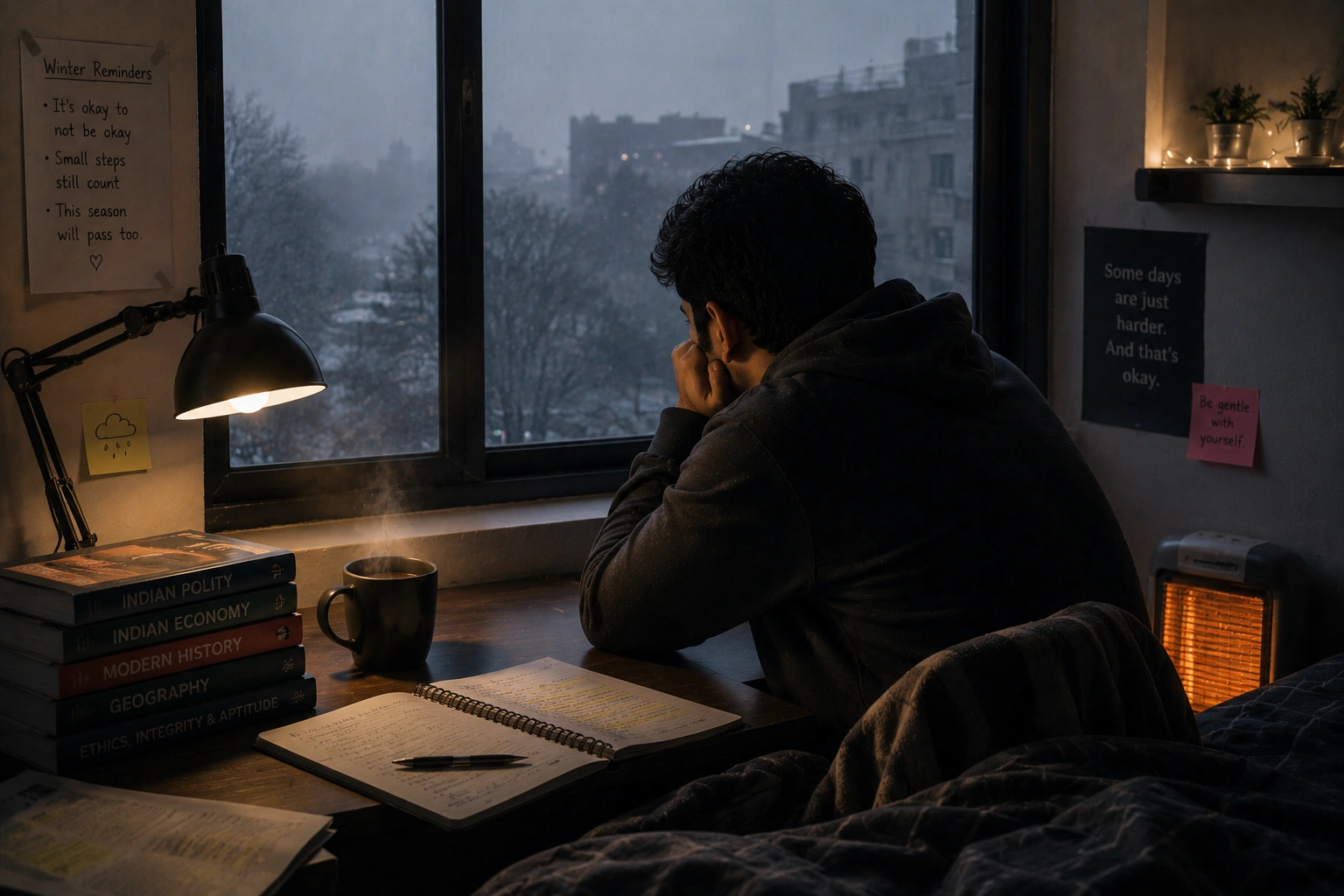
By the time you leave work now, it's already dark, the kind of dark that used to only arrive well after dinner a couple months ago. The mornings are colder too, harder to actually get out of bed for, and somewhere in the last few weeks you've noticed you're just quieter than usual, less interested in plans you'd normally say yes to without thinking twice. Nothing's actually wrong. You just feel like a slightly dimmer version of yourself, and you can't quite explain why to anyone who asks.
Why Winter Genuinely Affects Mood, Even in India
Here's the honest truth about winter low mood: it's easy to dismiss in a country that doesn't get the extreme darkness or snow associated with seasonal affective disorder elsewhere, but the underlying mechanism doesn't require extreme conditions to have a real effect. Shorter days mean less total daylight exposure, and daylight does genuine, measurable work in regulating mood, even in a city that never sees snow.
There's real research behind why this isn't just in your head. Experts studying seasonal affective disorder explain that light directly regulates the brain's internal clock, and disruptions to that light cycle can cause real cognitive and emotional shifts, including irregular sleep and low mood. During brighter months, the brain stores more of the chemicals associated with feeling happy, alert, and motivated, serotonin and dopamine specifically, and research involving hundreds of subjects has even found that the hippocampus, the brain region responsible for learning and memory, is measurably smaller during winter months and changes seasonally alongside the light (Michigan State University's overview of how light affects seasonal mood). None of that requires the dramatic darkness of a European winter to have some effect, it's a matter of degree, not a phenomenon that switches on or off entirely based on how cold it gets outside.
There's also a specific compounding effect in the Indian context that has less to do with light and more to do with what winter actually contains here, the tail end of festival season winding down, board and competitive exam pressure ramping up for students and their families, wedding season filling weekends with obligations rather than rest, and colder mornings making the easy, casual socializing of warmer months, evening walks, rooftop hangouts, spontaneous outings, genuinely less appealing to organize. The mood dip isn't just biological, it's layered on top of a season that's also, structurally, busier and more socially demanding in specific ways that quietly wear people down.
If the flatness that follows Diwali's high has already settled in by the time winter properly arrives, the seasonal light change can extend and deepen that same low, turning what might otherwise have been a short, festival-specific dip into a longer stretch that runs well into the new year.
Why This Gets Dismissed More Than It Should
A big part of what makes winter low mood hard to name is that Indian winters genuinely aren't severe in most places, which makes the whole idea sound almost imported, a concept borrowed from colder countries that doesn't quite seem to apply here. That dismissal, however reasonable it sounds on the surface, ends up leaving people without language for something they're still genuinely experiencing, just at a milder, less dramatic scale than the version most commonly discussed.
There's also a specific social pattern that makes winter feel more isolating even when nothing dramatic has changed, people naturally socialize less in cold weather, evening plans get cancelled more easily when the temperature drops, and the general pace of casual, spontaneous connection slows down across the season. That reduction in ordinary social contact compounds whatever mood effect the shorter days are already producing, and it's easy to miss because none of it looks like an obvious, singular cause, it's a dozen small reductions that add up quietly over weeks.
Exam season adds its own specific weight during these same months for students and their families, an already heavy period made heavier by shorter, colder days that reduce the small breaks and outdoor moments that might otherwise have offered some relief during an intense stretch. If you're already navigating serious anxiety around board results or exam pressure during this same window, the seasonal low can blend in with that anxiety in ways that make it genuinely hard to tell which feeling is driving which, the exam stress worsening the seasonal dip, or the seasonal dip making the exam stress feel heavier than it might otherwise.
Work routines shift too, in ways that quietly compound the effect. Waking up in the dark, commuting in the dark, and leaving the office after the sun's already gone means some people go through entire weekdays during winter with barely any real exposure to natural daylight at all, indoors from the moment they wake up to the moment they finally head to bed. That pattern alone, independent of the exam pressure or the wedding season, is enough to meaningfully affect mood over a sustained stretch, and it's worth noticing how much of your actual daylight exposure has quietly shrunk without you consciously deciding to spend the season indoors.
There's also a comparison effect that tends to sharpen the low mood further, watching social feeds fill up with year-end reflections, holiday trips, and festive plans that make your own quieter, flatter weeks feel more noticeably out of step than they might at another time of year. The season that's supposed to feel cozy and celebratory for everyone else can end up highlighting, by contrast, just how much less energy you actually have for any of it right now.
What Actually Helps
The most useful shift is treating winter low mood as a real, physiological pattern worth actively working with, rather than something to push through silently because it doesn't match the more extreme version of seasonal affective disorder you've heard about elsewhere. Naming it plainly, even just to yourself, takes away some of the confusion of feeling low without an obvious explanation.
It also genuinely helps to prioritize actual outdoor light exposure during these months, even briefly, since outdoor light remains significantly brighter than indoor lighting even on a cloudy or overcast day. A short walk during the brightest part of the day, sitting near a window rather than in an interior room, stepping outside during a work break instead of staying indoors the whole day, these small, deliberate choices genuinely add up over a season, even if any single instance feels too small to matter on its own.
It's worth being deliberate about maintaining social contact during winter specifically, rather than letting the season's natural pull toward staying in and cancelling plans go completely unchecked. That doesn't mean forcing yourself into everything, but it's worth noticing when declining plans has become the automatic default rather than an occasional, genuine choice, and pushing back gently against that default when you have the energy to.
It also helps to build something to look forward to into the colder months specifically, rather than treating the whole season as something to simply endure until spring or summer arrives. A planned trip, a regular activity with friends, even a small, recurring ritual just for yourself gives the season some shape and warmth that isn't dependent on the actual weather cooperating.
It's worth paying attention to sleep and movement too, both of which tend to shift quietly during winter in ways that can deepen the low mood further. Colder mornings make it tempting to oversleep or stay under the blanket longer than usual, and reduced outdoor activity often means less overall movement across the day. Neither change is dramatic on its own, but a winter routine that's drifted toward more sleep and less activity than your body actually needs can leave you feeling heavier and more sluggish than the season alone would otherwise explain, and small, consistent adjustments to both tend to have a real, noticeable effect over a few weeks.
If the low mood feels like it's going well beyond an ordinary seasonal dip, persisting most days for weeks, genuinely affecting your ability to function, it's worth talking to a mental health professional rather than assuming it's simply "just winter" and waiting it out. Seasonal mood changes are real, but they exist on a spectrum, and a milder dip that responds to light and connection is different from something that deserves proper clinical attention.
It's also worth being specific with the people close to you about what's actually going on, rather than letting the flatness get misread as disinterest or distance. A quick, honest "I've just been feeling low with the weather lately, it's not about you" prevents a friend or partner from quietly assuming they've done something wrong, and it opens the door for them to actually understand what you're going through instead of guessing at a cause that isn't the real one.
Where Artha Fits, If It Does
A lot of what makes winter low mood hard to talk about is that it feels too vague and too minor to bring up seriously, "I'm just a bit off lately" doesn't sound like something worth a real conversation, even when it's genuinely affecting how your days feel. That's part of why Just Talk Shop exists inside Artha, a place to say "I don't know why but I've just felt flatter than usual since the weather changed" to someone anonymous who won't dismiss it as too small a thing to actually talk through.
This dip is real, even without snow, even without the extreme version of seasonal affective disorder most people picture when they hear the term. It deserves a little more care and attention than "just winter, it'll pass," even while it's also genuinely true that, for most people, it does pass, especially once the days start getting longer again.
It's worth remembering, too, that this particular low doesn't need a dramatic explanation to be worth taking seriously. You don't need a diagnosis, a crisis, or a single identifiable cause to justify giving yourself more light, more rest, and more patience during these specific weeks. Sometimes the season itself is reason enough.
What's one small, deliberate thing you could build into these next few weeks that might actually make the season feel a little less flat, rather than just waiting for spring to quietly fix it on its own?
Quick answers
Things people usually want to know.
Does winter actually affect mood in India, even without extreme cold or snow?
Yes, the underlying mechanism doesn't require extreme conditions. Shorter days mean less daylight exposure, and daylight does genuine, measurable work in regulating mood, even in a city that never sees snow.
How does reduced daylight actually affect the brain and mood?
Light regulates the brain's internal clock, and disruptions to that cycle can cause real cognitive and emotional shifts. Research has even found the hippocampus, which handles learning and memory, is measurably smaller during winter months and changes seasonally.
Why does winter feel heavier in India even though it's mild compared to other countries?
Because Indian winters coincide with the tail end of festival season winding down, exam pressure ramping up, wedding season filling weekends, and colder mornings making casual socializing less appealing, all layered on top of the light change.
Is it dismissive to say seasonal affective disorder doesn't apply in India?
It's an understandable assumption since Indian winters aren't severe, but it leaves people without language for something they're still genuinely experiencing, just at a milder scale than the dramatic version most commonly discussed.
Does socializing less in winter make the low mood worse?
Yes, people naturally socialize less in cold weather, plans get cancelled more easily, and that reduction in ordinary contact compounds whatever mood effect the shorter days are already producing.
What actually helps with winter low mood?
Prioritizing real outdoor light exposure, even briefly, since outdoor light stays significantly brighter than indoor lighting even on a cloudy day. A short walk during the brightest part of the day genuinely adds up over a season.
Should I push myself to keep social plans during winter even when I don't feel like it?
It's worth noticing when declining plans has become the automatic default rather than an occasional genuine choice, and gently pushing back against that default when you have the energy to.
Is winter low mood connected to the post-Diwali comedown?
Often, yes, if the flatness that follows Diwali's high has already settled in, the seasonal light change can extend and deepen that same low into a longer stretch running well into the new year.
When should winter low mood be taken to a mental health professional?
If it persists most days for weeks and genuinely affects your ability to function, it's worth talking to a professional rather than assuming it's simply "just winter." Seasonal changes exist on a spectrum, and this is different from a milder dip that responds to light and connection.
How do I explain feeling low in winter to people close to me?
Be specific rather than letting the flatness get misread as disinterest, something like "I've just been feeling low with the weather lately, it's not about you" prevents a friend or partner from assuming they've done something wrong.