
You Have Friends But Feel Alone? Here's Why (India)
May 30, 2026 · 8 min read · by Shivam Kushwaha, Artha founder
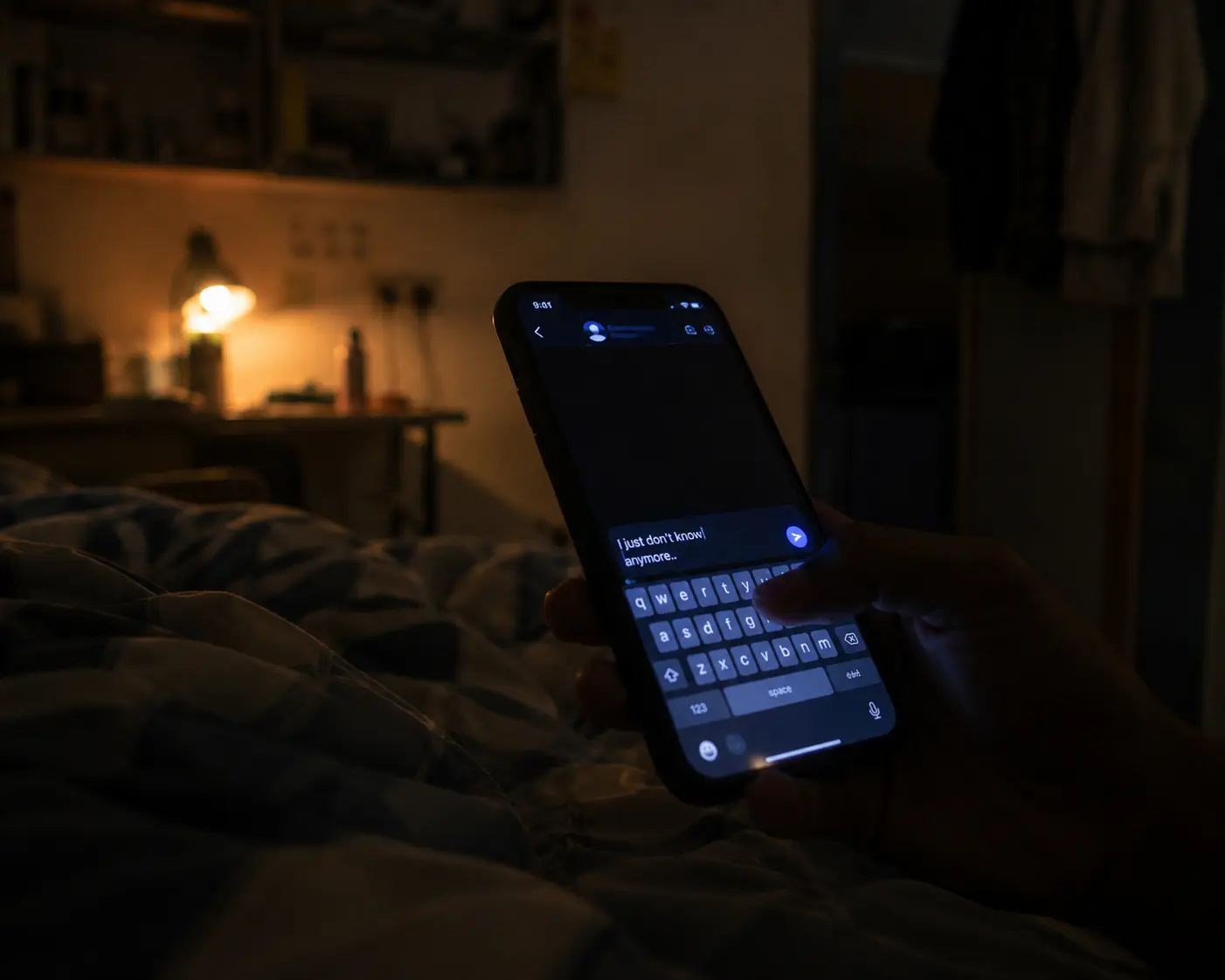
11:40pm. Phone on 2%. The hostel group chat is still buzzing about tomorrow's exam, and you've typed "guys can I tell you something" four times and deleted it four times. Charger's in the next room. You don't go get it. You just lock the phone and stare at the ceiling, because somehow that felt easier than finishing the sentence.
You have people. That's the confusing part.
The kind of alone that doesn't look like loneliness
You're not friendless. Maybe you have a tight hostel group, a chai-break gang at college, a WhatsApp family group that pings all day. Maybe your parents are right there in the next room. And yet there's this specific thing sitting in your chest that you can't seem to hand over to anyone, not even the people who'd probably listen.
It's a strange kind of alone. Not the empty-room kind. The kind where you're surrounded but still editing yourself in real time, choosing what's "safe" to say and what isn't. During placement season, everyone's anxious, but nobody wants to be the one who admits they're falling apart. During CA exams, the WhatsApp group is full of "all the best" messages, but try telling that same group you've been crying in the library bathroom. It doesn't fit the tone. So you don't say it.
This isn't really about whether you feel like no one understands you. It's about whether anyone in your existing circle feels like a safe place to be fully honest. Those are two very different questions, and most people never separate them.
Why even close people start feeling far away
Here's the part that took me a while to understand myself: closeness and safety aren't the same thing.
You can know someone for years — share a room, share a tiffin, share inside jokes — and still feel like you can't tell them the actual heavy stuff. Partly because roles get fixed early. If you've always been "the strong one" or "the funny one" in your group, saying something vulnerable feels like breaking a script everyone's used to.
There's also something specific to small-town and middle-class Indian households here. Emotional conversations often weren't modelled at home. Parents showed love through provision — fees paid, food on the table, sacrifices made — and that's real love, but it doesn't always come with the vocabulary for "I'm anxious" or "I feel empty lately." So a lot of us grow up never quite learning how to ask for emotional support, let alone receive it. We default to managing things alone because that's the only model we were ever shown.
And honestly, there's a simpler reason too. Saying something out loud makes it real. As long as it stays in your head, you can pretend it's manageable.
What's actually happening when you go quiet
When something feels too big to say to people who know you, the brain does a quiet cost-benefit calculation. What if they judge me. What if it changes how they see me. What if I become "the one going through something" in the friend group. The risk of being misunderstood by someone whose opinion matters can feel scarier than the loneliness itself.
That's why a lot of people end up typing things to strangers online they'd never say to a childhood best friend. Not because strangers care more. But because there's nothing to lose with them — no shared history to protect, no image to maintain, no fear of it changing the relationship tomorrow morning. We've written more about why it's often easier to open up to a stranger online than to someone close, if this part feels familiar.
Friends, therapy, journaling — what actually helps and what doesn't
None of these are competing with each other. They're just built for different moments.
Friends are good for the in-between stuff — the daily venting, the "yaar I'm so done with this professor" kind of talk. But they're not always the right audience for the deeper, messier things, especially if you're worried about being treated differently afterward.
Therapy genuinely helps, and if you can access it, it's worth trying. But it's not always realistic — cost, stigma at home, waitlists, or simply not knowing how to bring it up with parents who'd ask "kis baat ka therapy." For a lot of Indian young adults, that door isn't fully open yet, even if it should be.
Journaling helps you organise your own thoughts, but it doesn't replace the specific relief of having another person actually receive what you've written. Some things need to land somewhere outside your own head to feel less heavy.
Anonymous conversation, the kind where you're not managing anyone's image of you, fills a different gap entirely. It's not therapy and it's not a replacement for real friendship. But for that specific 1am moment when you need to just say the thing to someone who'll simply listen, it works in a way nothing else quite does. If you're curious what that actually feels like in practice, we've written about what anonymous conversations feel like from the other side.
Where Artha fits into this
This is more or less why I ended up building Artha. I kept noticing that the moments I most needed to talk were the moments I least wanted to explain myself to someone who knew me. Artha is built around that exact gap — anonymous conversations where you pick what's actually on your mind and get matched with someone dealing with the same thing, without it changing anything in your real life.
A note from me
I'm Shivam. Eighteen, from Singrauli, now in Indore, studying for CA. I built Artha at night, mostly because I was the kid lying awake with something I couldn't say to anyone around me either. I'm not a therapist and I don't have it all figured out. I just know what that specific kind of alone feels like, and I wanted something to exist for it.
Maybe the people around you aren't the wrong people. Maybe it's just that not every feeling needs to go to someone who already knows your whole story.
What's the one thing you've never said out loud to anyone, and what do you think is actually stopping you?
Key References & External Resources
Quick answers
Things people usually want to know.
Why do I feel lonely even though I have friends?
Because closeness and safety aren't the same thing. You can be surrounded by people you've known for years and still feel like none of them are the right audience for what you're actually going through.
Is it normal to feel like no one understands me?
Yes, very common, especially in your late teens and twenties when you're figuring out your identity while everyone around you seems to have their version of you already fixed in their head.
Why is it easier to talk to strangers than to close friends?
There's no shared history to protect with a stranger, so there's less fear of judgment changing the relationship. That removes a lot of the hesitation people feel with friends or family.
Why don't Indian families talk about feelings openly?
Emotional vocabulary often isn't modelled at home, especially in middle-class households where love is expressed through providing for the family rather than through conversation. It's not a lack of love, just a different way it was shown.
Should I see a therapist or just talk to someone anonymously?
They serve different purposes. Therapy offers structured, professional support over time. Anonymous conversation is useful for immediate emotional release in the moment. Many people benefit from both.
What does anonymous emotional support actually mean?
It means talking openly with someone who doesn't know your name, your background, or your social circle, so you can say things without worrying about how it'll affect your real-life relationships.
Is feeling alone with friends around a sign of depression?
Not necessarily. It can simply mean you don't have a safe outlet for certain feelings yet. If the heaviness is constant or affecting daily life, it's worth speaking to a mental health professional to understand what's going on.
How do I start opening up to people close to me?
Start small. Share something low-stakes before working up to the harder stuff. Trust usually builds gradually, not all at once.
Are anonymous chat apps safe in India?
It depends on the platform. Look for ones with clear intent (so conversations have direction), reporting and moderation systems, and no requirement to share identifying information.
What is Artha and how is it different from other apps?
Artha is an anonymous talk network. Instead of random chat, you pick a room based on what's on your mind, and get matched with someone who's dealing with the same thing — so the conversation actually goes somewhere.
More from Artha
Other things we've been writing about.
Why It's Easier to Open Up to a Stranger Online
Telling a stranger online how you really feel is often easier than telling your closest friend. Here's the quiet psychology behind it — and why it's okay.
Feeling lonely but scared to reach out — what to actually do
Wanting connection but too scared to reach out isn't laziness — the fear is real. Here's why it happens, and the smallest first step you can take today.
What Anonymous Conversations Actually Feel Like
Talking to someone who doesn't know your name sounds strange until you've done it. What anonymous conversations actually feel like, and why they help.