
Why Indian Families Don't Talk About Emotions
May 29, 2026 · 8 min read · by Shivam Kushwaha, Artha founder
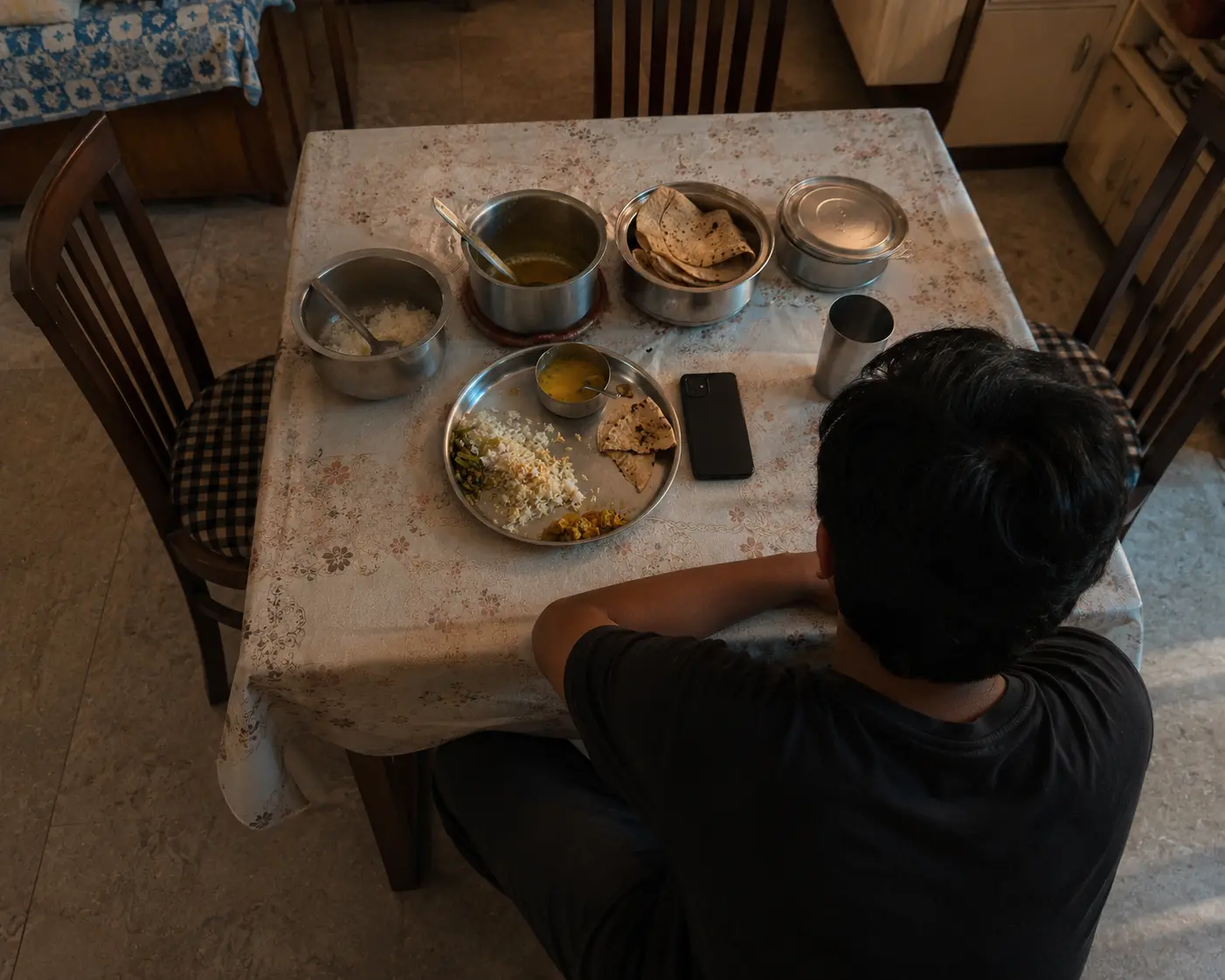
Why Indian families don't talk about feelings (and what that quietly does to us)
You're twelve, standing in the kitchen doorway, crying about something that felt enormous at the time. A friend said something cruel, or you failed a test you'd studied hard for. Your mother looks up from the stove, says "beta it's nothing, go wash your face," and goes back to the tadka. Nobody was cruel to you in that moment. Nobody yelled. It just quietly ended there, and you learned something without anyone meaning to teach it.
You learned that feelings get a few seconds of airtime before the room moves on.
The specific silence of an Indian household
It's not that Indian parents don't love their kids. Anyone who's grown up in a middle-class Indian home knows love looks like fees paid without complaint, tiffins packed at 6am, a mother staying up because you have an exam. The love is real and it is enormous. It just rarely comes wrapped in words like "how are you feeling" or "that sounds hard."
Instead, feelings get folded into practical concern. "Have you eaten," not "are you okay." "Don't worry so much, focus on studies," not "tell me what's actually bothering you." During board exam season or CA prep, stress gets acknowledged only as something to manage, never something to sit with. In the family WhatsApp group, it's forwards and "good morning" messages and photos of festivals, never anyone typing "I've been feeling low lately." Even at family functions, if someone's clearly upset, the aunties change the subject faster than you can blink, because emotional discomfort in a room full of relatives is somehow worse than the actual problem.
Growing up in that, you learn efficiency. Name the feeling fast, minimize it faster, move on before anyone gets uncomfortable including yourself.
Why this pattern exists, and why it's not really anyone's fault
A lot of it comes from what our parents themselves grew up with. Most Indian parents in their 40s and 50s were raised by a generation focused almost entirely on survival and duty, provide for the family, get the kids educated, keep the household running. There wasn't much bandwidth left over for emotional vocabulary, because nobody around them had it either. You can't teach a language you were never taught.
There's also a cultural discomfort with vulnerability being seen as weakness, especially for anything that isn't tied to visible achievement. Crying over a rank in class is somewhat acceptable. Crying because you feel directionless or empty is harder to place, because it doesn't map onto anything the household knows how to fix.
So kids learn early that certain feelings are simply inconvenient. Not wrong exactly. Just inconvenient, in the way a small leak is inconvenient, better to mop it quietly than make a scene about it.
What this costs us later, and what actually helps
The cost shows up years later, usually quietly. A lot of us reach our twenties genuinely unable to name what we're feeling beyond "fine" or "stressed," because nobody ever asked us to get more specific than that. We become people who can manage a crisis for a friend beautifully but freeze completely when someone asks how we're really doing.
Therapy helps here, genuinely, especially with building emotional vocabulary from scratch as an adult. It's not always accessible though, and plenty of parents still don't fully understand what it's for, which makes it harder to access without a longer conversation first.
Friends help too, but only if you've found ones who've built that vocabulary themselves, which isn't a given, since most of us are figuring this out at the same pace. We've written about how to vent without feeling like a burden, which might help if this is new territory for you.
Talking to a stranger, someone anonymous with zero connection to your family or your image at home, often ends up being the first place people actually practice naming what they feel out loud. Not because it's a replacement for real intimacy, but because it removes the fear of disappointing someone who raised you.
Where Artha fits into this
This is part of why Artha exists, as a space built for exactly this kind of practice. Saying the actual feeling, not the polished version, to someone with no stake in how put-together you seem. For a lot of people, it's the first time they hear themselves say the real sentence out loud.
A note from me
I'm Shivam, eighteen, originally from Singrauli, now in Indore studying for CA. I grew up in a house that loved me fiercely and rarely talked about feelings directly, and it took me a long time to even notice the gap between those two things. I built Artha partly from that gap, not to fix Indian families, just to give people one place to practice saying things out loud that home never quite made room for.
Maybe your family isn't broken. Maybe they just never got handed the words either, and neither did you, until now.
What's one feeling you've never actually said out loud to anyone in your family, even though they probably love you enough to hear it?
When was the last time someone asked how you were doing and didn't move on before you finished answering?
Key References & External Resources
Quick answers
Things people usually want to know.
Why don't Indian families talk about emotions?
Largely because emotional vocabulary wasn't modeled for the current parent generation either, who grew up focused on survival and duty rather than emotional expression, so it was never passed down.
What does "beta it's nothing" actually teach children?
It teaches kids that their feelings are inconvenient and should be minimized quickly, which often leads to difficulty naming or expressing emotions as adults.
Is it normal to not know how to express my feelings as an Indian young adult?
Very normal. Many people raised in emotionally reserved households never learned specific emotional vocabulary and have to build it deliberately later in life.
Do Indian parents not express love because they don't feel it?
No, the love is usually very real. It's typically expressed through provision and practical care rather than verbal emotional acknowledgment.
How can I build emotional vocabulary as an adult?
Practice naming feelings more specifically than "fine" or "stressed," in journaling or conversation, and consider talking to someone, whether a friend, therapist, or anonymous listener, to practice saying it out loud.
Is therapy necessary to deal with growing up in an emotionally distant household?
Not necessary, but it can help significantly, especially with unlearning patterns of minimizing your own feelings.
Why is emotional vulnerability seen as weakness in Indian culture?
Partly due to a cultural emphasis on resilience and duty over individual emotional expression, especially for feelings not tied to visible achievement or a fixable problem.
How do I talk to my parents about feelings if they've never done that with me?
Start small and specific, rather than expecting a full emotional conversation right away. Consistency over time usually works better than one big talk.
Why is it easier to talk to a stranger about feelings than to family?
There's no risk of disappointing someone who raised you, and no existing image to protect, which often makes it easier to say things honestly for the first time.
How does Artha support honest emotional conversations?
Artha is an anonymous talk network built for genuine, honest conversations, often useful for people practicing naming feelings they've never said out loud before.
More from Artha
Other things we've been writing about.
You Have Friends But Feel Alone? Here's Why (India)
Feel like you have no one to talk to in India, even with friends around? Here's why this happens and what actually helps when no one feels safe to tell.
Feeling lonely but scared to reach out — what to actually do
Wanting connection but too scared to reach out isn't laziness — the fear is real. Here's why it happens, and the smallest first step you can take today.
Anonymous Relationship Advice in India Without the Gossip
Stuck in a relationship situation but can't tell anyone? Here's how to get honest, anonymous relationship advice in India without the judgment.