
The "Posting Zero" generation: connected but lonely
May 24, 2026 · 6 min read · by Shivam Kushwaha, Artha founder
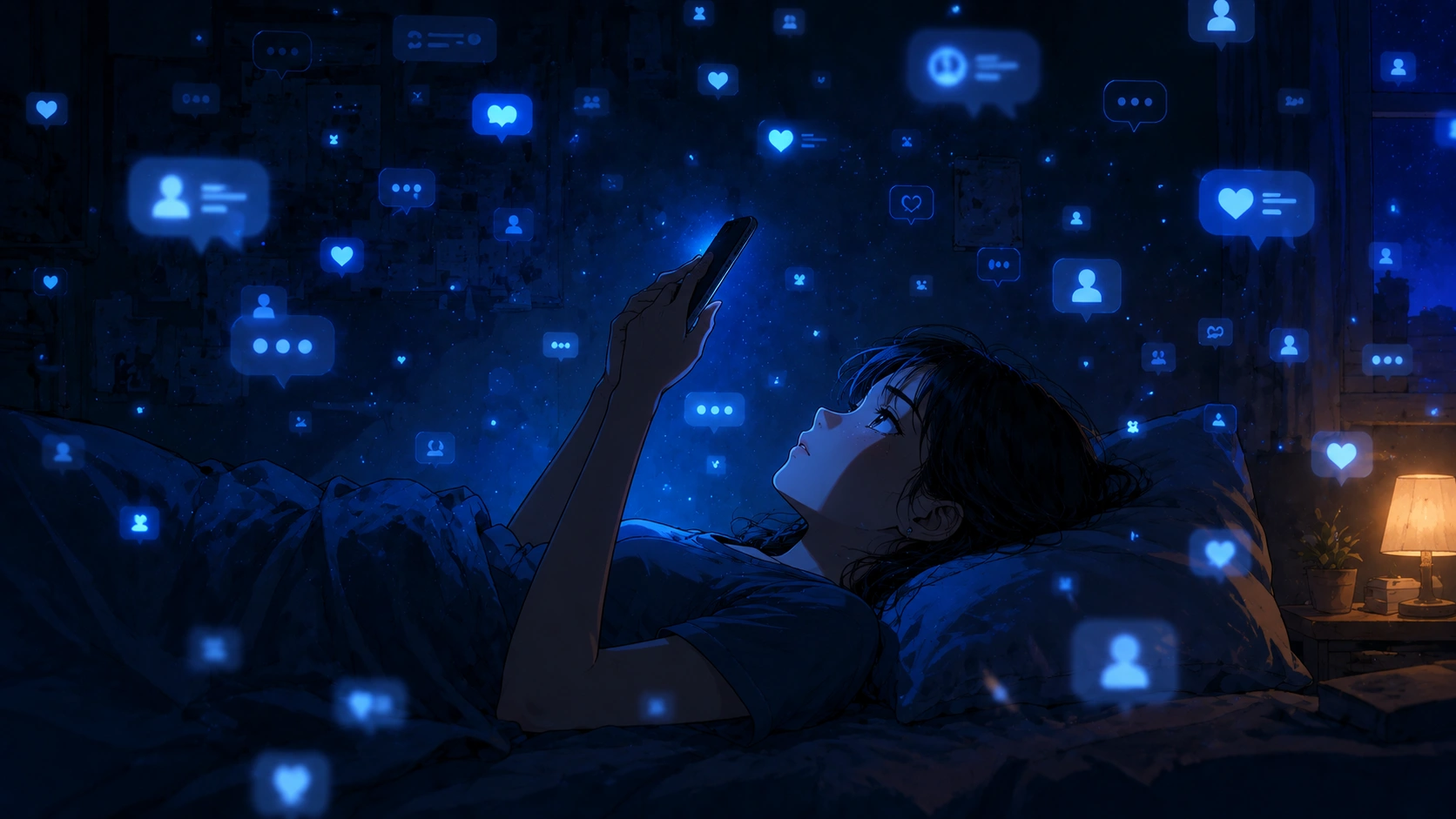
Here's a strange thing about being young right now.
You can have five hundred followers and not have a single person to text when something actually goes wrong. You can spend three hours on your phone and feel like you talked to no one. You can know what someone you went to school with ate for breakfast, but have no idea how they're actually doing.
We're the most connected generation in history. We're also, by almost every measure, the loneliest. And those two things aren't a contradiction — they're the same thing seen from two angles.
This is the part of the "posting zero" story that doesn't get talked about enough. People know Gen Z is posting less. What they miss is why it's tangled up with feeling more alone than ever.
What "connected but lonely" actually means
The numbers are honestly a little startling once you sit with them.
Research has consistently found that around 73% of Gen Z report feeling lonely either sometimes or often — higher than any generation before them. A spring 2025 survey of nearly 66,000 US college students found 46.7% screened positive for loneliness on a standard psychological scale, and the link to screen time keeps showing up across separate research too, heavier passive social media use tracks with more loneliness, not less. The former US Surgeon General went as far as calling chronic loneliness as harmful to health as smoking 15 cigarettes a day.
And it's not just a Western thing. A March 2026 survey of Indian adults by Gleeden and Ipsos found that among people in relationships, 57% feel lonely inside them, despite constant digital contact through texts and calls. Indian researchers have been writing about the same paradox — being "connected yet isolated," surrounded by WhatsApp groups buzzing with good-morning messages and late-night memes, yet feeling like nobody actually knows them.
So the picture is clear. More connection. Less closeness. At the same time.
Why more connection makes us feel less close
This is the part that took me a while to understand. I remember a night when I spent almost an hour scrolling Instagram. By the end of it, I knew who had gone on trips, who got internships, who was in a relationship, and who had posted a new reel. But if someone had asked me who I'd actually talked to that day, I couldn't name a single real conversation. That was the first time I realised being updated on people's lives isn't the same thing as feeling close to them.
The answer, when I eventually found it, is that most of what social media calls "connection" is actually performance, in both directions. When you post, you're performing a version of your life. When you scroll, you're watching everyone else perform theirs. Two people can interact all day — likes, comments, story reactions — and neither one ever says a true thing.
Researchers have a name for this. They call it the difference between active and passive use, and the findings are uncomfortable: passive scrolling makes loneliness worse, but here's the twist — even active posting can make it worse too, because when you share something hoping to connect and get minimal response, the silence stings more than not posting at all.
So you're stuck. Post and risk the silence. Don't post and slowly disappear. Either way, the loop doesn't give you the one thing you're actually looking for, which is to feel like someone gets you.
That's the engine underneath "posting zero." People aren't going quiet because they stopped caring about connection. They went quiet because the public version of connection stopped delivering it.
The illusion of friendship
There's a specific trap in all of this that's worth naming.
A like is not a conversation. A comment is not being known. A DM reaction is not the same as someone asking how you really are. But they all feel like connection in the moment — little hits of social validation that your brain treats like the real thing. So you keep reaching for them, and they keep almost-but-not-quite filling the gap.
Indian writers have described this well: social media creates the illusion of friendship rather than the substance of it. You have hundreds of acquaintances and a feed full of people, but the kind of conversation that actually makes you feel less alone — the slow, honest, unimpressive kind — has almost no place to happen on a public feed.
The cruel part is that the loneliness then makes you scroll more, looking for relief in the exact place that caused it. It's like drinking salt water when you're thirsty.
So what do we actually do with this?
I don't think the answer is "delete everything and touch grass." That advice is everywhere and it's too simple. Most of us aren't going to log off forever, and we shouldn't have to.
What I keep coming back to is something quieter: the problem was never connection itself. It was performed connection. The fix isn't less talking — it's a different kind of talking. The kind where nobody's keeping score. Where you're not curating, not performing, not bracing for the silence after you post.
I remember having a short late-night conversation with someone who knew almost nothing about me. We talked for maybe twenty minutes and never spoke again. But when I put my phone down, I felt less alone than I had after spending the entire evening scrolling through hundreds of posts and stories. That contrast stayed with me. The feed was full. The conversation was short. And the conversation won, every time.
That's what people are quietly searching for when they stop posting.
The "posting zero" generation isn't lonely because it stopped sharing. It's lonely because it hasn't yet found enough places to share that don't ask for a performance in return.
When did you last have a conversation where you weren't performing even a little?
Being surrounded by connection and still feeling alone isn't a personal failing. It's what happens when the spaces we have ask us to perform instead of just be. If you've felt it, you're far from the only one.
Related read: Why Indian Gen Z is quietly leaving performative social media — the wider shift this loneliness sits inside.
Related read: How to have a real conversation online (without the mask) — what to actually do when you're tired of the polished, hollow version.
Key References & External Resources
Quick answers
Things people usually want to know.
What does "connected but lonely" mean?
It describes the paradox where someone has many digital connections — followers, group chats, constant notifications — yet still feels emotionally isolated. The connections are real but shallow. You can interact with hundreds of people online without anyone actually knowing how you're doing. Research consistently finds that Gen Z, the most digitally connected generation in history, also reports the highest loneliness rates, which captures this paradox exactly.
Why does Gen Z feel so lonely despite being online all the time?
Because most online interaction is surface-level. Likes, comments, and story reactions feel like connection but don't carry emotional depth. Studies show around 73% of Gen Z report feeling lonely sometimes or often. The constant comparison to curated highlight reels, the lack of genuine back-and-forth, and the replacement of deep conversations with quick reactions all contribute. Being "seen" online is not the same as being known.
Is social media actually causing loneliness, or is it just correlated?
It's complicated, but the research points to a real relationship, not just coincidence. Surveys of college students consistently find the same pattern: heavier passive social media use, especially once it stretches past an hour or two a day, tracks with higher loneliness. The mechanism matters more than the time, though — passive scrolling tends to worsen loneliness, while using social media to maintain genuine relationships can help. The problem is when digital connection replaces real connection entirely.
What is "posting zero" and how is it related to loneliness?
Posting Zero, a term coined by journalist Kyle Chayka, describes people quietly stopping posting on social media because of the exposure and pressure involved. It's related to loneliness because the same forces drive both — public feeds stopped delivering real connection, so people both posted less and felt more alone. People didn't go quiet because they stopped wanting connection. They went quiet because the public version of it wasn't working.
Why does posting something and getting no response feel so bad?
Because you shared it hoping to connect, and silence reads as rejection. Researchers have found that active posting can actually increase loneliness for exactly this reason — when you put something out hoping for engagement and receive little, it leaves you feeling more discouraged and disconnected than if you'd never posted. This is part of why many people stop posting altogether.
Is feeling lonely on social media a sign of something more serious?
Sometimes loneliness is situational, and sometimes it's a symptom of something deeper like depression or anxiety. If the loneliness is persistent, affects your daily life, or comes with other symptoms like loss of interest or hopelessness, it's worth talking to a mental health professional. Feeling lonely occasionally is normal and human. Feeling chronically alone despite wanting connection is worth taking seriously.
Can talking to strangers online actually help with loneliness?
It can, when it's the right kind of conversation. The loneliness paradox isn't caused by talking to people — it's caused by performed, shallow connection. A genuine conversation with a stranger, where there's no audience and no performance, can sometimes feel more real than interacting with people who know you. The key is depth and honesty, not the number of connections.
How do I move from shallow online connection to real connection?
Start by noticing the difference. A like is not a conversation. Aim for fewer, deeper interactions instead of more, shallower ones. Move important conversations into private spaces — DMs, voice notes, small group chats — where there's no audience. Reach out to one person genuinely instead of broadcasting to everyone. The goal is connection where nobody is keeping score.
Is the answer just to delete social media?
Not necessarily. Deleting everything is a common piece of advice but it's often too simple — most people won't do it and shouldn't have to. The deeper issue isn't connection itself, it's performed connection. Using social media intentionally to maintain real relationships can genuinely help, while passive scrolling and performance-driven posting tend to hurt. The fix is changing how you connect, not just cutting it off.
More from Artha
Other things we've been writing about.
Why Indian Gen Z Is Leaving Performative Social Media
Posting Zero is real, and it's hitting India harder than anyone's reporting. Here's what's actually happening — and why it makes sense.
Feeling lonely but scared to reach out — what to actually do
Wanting connection but too scared to reach out isn't laziness — the fear is real. Here's why it happens, and the smallest first step you can take today.
First Year College Loneliness India: You're Not the Only One
Everyone's hostel story looks like a movie. Yours feels different. The honest truth about first year college loneliness in India.