Diwali Loneliness: The Festive Season's Hidden Epidemic
September 21, 2026 · 6 min read · by Shivam Kushwaha, Artha founder
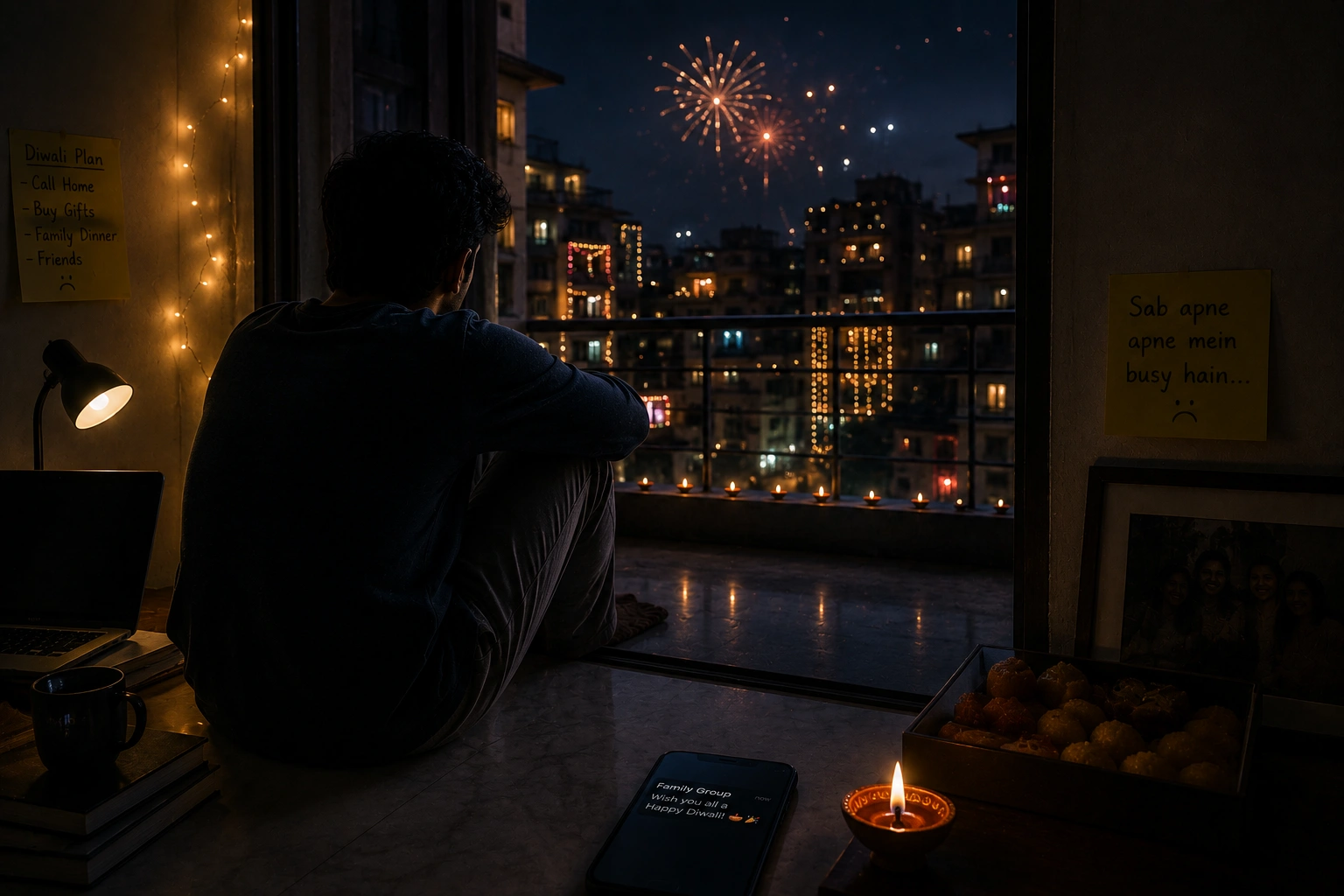
The Festival of Everyone Else's Light
The lights go up. The diyas glow. Families gather. Firecrackers echo through neighborhoods. Every home seems to be glowing with warmth, connection, joy.
And you're sitting in your room, alone, wondering why the festival of light feels so dark.
Diwali loneliness is one of the most painful experiences in Indian life — because it's the festival where being alone feels most visible, most wrong, most like failure.
Why Diwali Amplifies Loneliness
Every festival has a social dimension. Diwali's is especially intense:
Family centrality Diwali is fundamentally about family. The rituals, the prayers, the meals, the decorations — they're designed for gathering. If your family is far away, or if your relationship with them is complicated, the festival becomes a reminder of what's missing.
Social media overload The week before Diwali, social media becomes a parade of togetherness. Family photos, party pictures, gift exchanges. Every post is evidence that everyone else is connected while you're not.
Cultural expectation Indian culture expects Diwali to be happy. Admitting loneliness during Diwali feels like betraying the festival itself. So you suffer in silence, adding isolation to loneliness.
Visual intensity The lights, the decorations, the fireworks — Diwali is visually overwhelming. Every lit home is a signal of connection. The darkness of your own space becomes more stark by contrast.
The Different Faces of Diwali Loneliness
Loneliness during Diwali isn't one thing:
The away-from-home loneliness You're in a different city for work or studies. Your family is celebrating without you. You call them, hear the festivities in the background, and hang up feeling emptier than before.
The single loneliness Everyone is with their partner. The social pressure to be coupled during Diwali is intense. Being single during the festival feels like a public admission of unworthiness.
The estranged loneliness Your family relationships are complicated. The gathering you're supposed to attend feels like a minefield. The loneliness of being surrounded by people you can't be honest with is its own kind of pain.
The grief loneliness This is your first Diwali without someone. A parent, a grandparent, a friend. The empty chair at the celebration is louder than any firecracker.
The depression loneliness You're struggling with your mental health, and the festive energy makes it worse. The gap between how you feel and how you're supposed to feel becomes unbearable.
What Nobody Says
The things people don't talk about during Diwali:
You can grieve during a festival Festivals don't pause grief. They amplify it. If you've lost someone, Diwali will be harder than other days. That's okay.
You can skip the celebrations You don't have to attend every gathering. You don't have to decorate. You don't have to perform happiness. Your mental health matters more than cultural expectation.
You can create your own traditions The traditions you grew up with aren't the only options. Create new ones that fit your life. A quiet dinner. A walk. A movie. A phone call with someone who matters.
You can be honest Tell someone you're struggling. The weight of pretending to be fine during Diwali is crushing. Breaking the silence is the first step to breaking the loneliness.
Finding Light in the Dark
Diwali is about light overcoming darkness. The irony is that the people who need that message most are often the ones who can't feel it.
If you're lonely this Diwali, here's what might help:
One small connection Not a party. Not a gathering. One person. One conversation. One moment of genuine human contact. That's enough.
Self-compassion You're not failing because you're alone. You're human. Loneliness is a universal experience, even during festivals. Treat yourself with the kindness you'd offer a friend.
Movement Walk. Go outside. See the lights. The physical act of moving through the world can break the isolation loop, even briefly.
Meaning over celebration If celebration feels hollow, find meaning instead. Reflect on what this year taught you. Write. Create. Process. The festival doesn't have to be loud to be meaningful.
The Morning After
Diwali ends. The lights come down. The celebrations fade. And if you were lonely during the festival, you might feel a strange relief — and then guilt for feeling relieved.
The festival is temporary. Your feelings are valid regardless of the calendar. You don't have to wait for next Diwali to find connection. You can start now.
Diwali loneliness is heavy. Artha is a space where you can talk about the isolation, the grief, and the things you can't say to anyone who's too busy celebrating to listen.
Quick answers
Things people usually want to know.
Why does Diwali feel so lonely?
Diwali amplifies social connection — family gatherings, parties, celebrations. If you're isolated, single, away from family, or struggling emotionally, the contrast between the festive atmosphere and your internal experience creates intense loneliness.
Is it normal to feel lonely during Diwali?
Very normal. The pressure to be happy and connected during a festival designed for togetherness makes loneliness feel more acute. You're not alone in feeling alone — many people experience this, but few talk about it.
How do I cope with Diwali loneliness?
Acknowledge the feeling without judgment. Create your own traditions — cook a meal, watch a movie, call someone you care about. Volunteer. The goal isn't to pretend you're fine — it's to find small moments of connection and comfort.
Should I force myself to attend Diwali gatherings?
Not necessarily. Forced social interaction can worsen loneliness. But isolation can too. Find a middle ground — one small gathering, a brief visit, a phone call. Small doses of connection are better than complete withdrawal.
Why is Diwali harder than other festivals for lonely people?
Diwali's emphasis on family, light, and togetherness creates an especially sharp contrast with loneliness. The visual and social intensity — lights everywhere, families gathering, celebrations in every home — makes isolation feel more visible and more painful.