Diwali Bonus Trading: When Festive Cash Meets Market Greed
September 18, 2026 · 5 min read · by Shivam Kushwaha, Artha founder
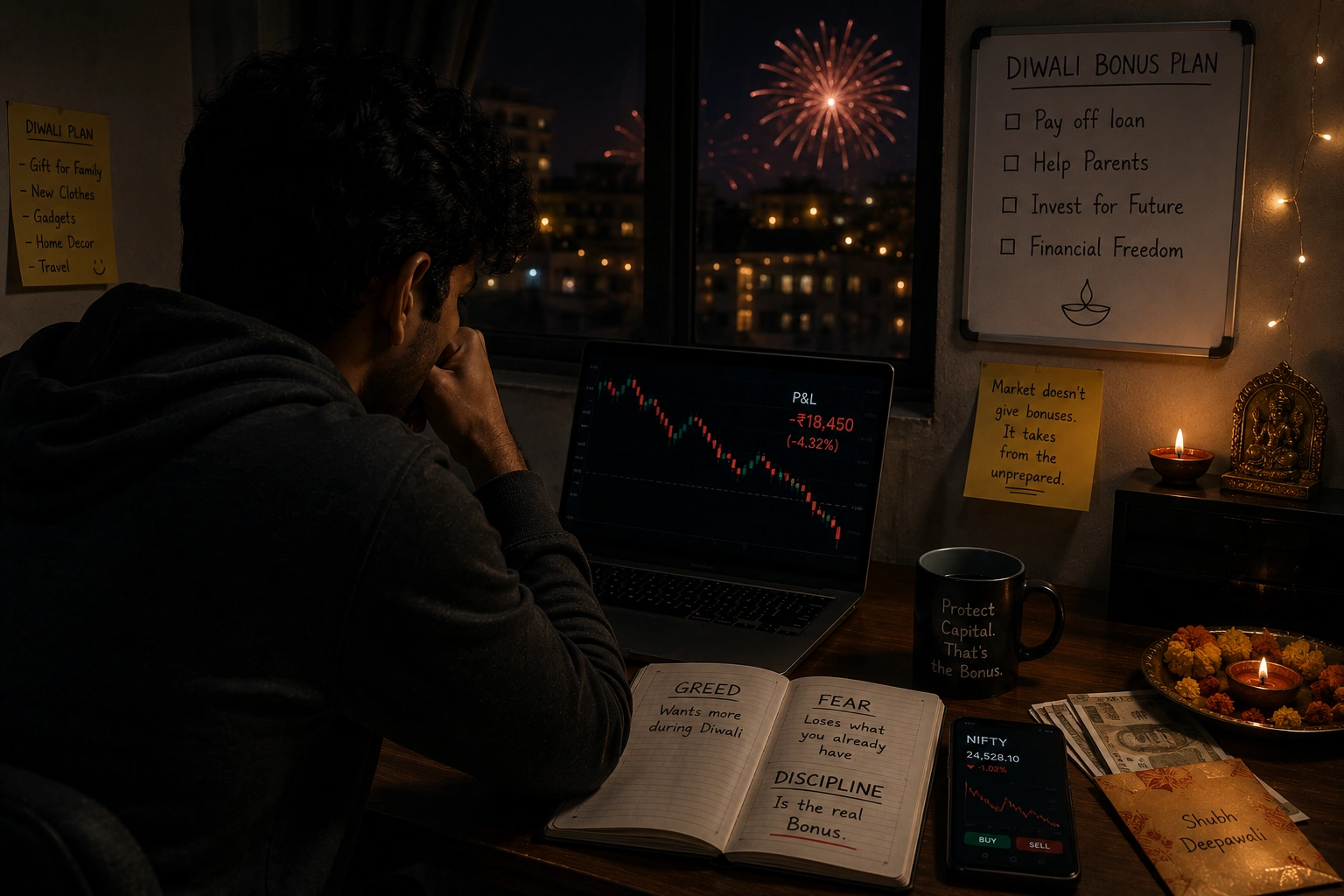
The Bonus Arrives
The Diwali bonus hits your account. Suddenly, you have money you didn't have before. The festive energy is high. Everyone around you is spending, celebrating, investing. The market is full of Diwali optimism. "Buy now, the market will go up." "Invest your bonus, it'll double by next Diwali."
The bonus feels like opportunity. It's actually a trap.
The Psychology of Bonus Money
Bonus money isn't treated like salary by your brain:
Free money effect Even though you earned the bonus through work, it feels like found money. This psychological categorization lowers your risk aversion. You're willing to gamble with bonus money in ways you'd never gamble with salary.
Festive optimism Diwali is associated with prosperity, new beginnings, and abundance. The cultural context makes you optimistic about everything — including market returns. The optimism isn't rational; it's emotional.
Social comparison Everyone around you is spending. Your friends are buying things. Your colleagues are investing. The social pressure to put the money to "productive use" creates urgency.
Fresh start bias The new year (financial year in many cultures) makes you believe this is the beginning of something. The bonus is the seed. The market is the soil. The returns are the harvest. The fantasy is more compelling than reality.
How the Trap Works
The bonus-to-trading pipeline is predictable:
The initial investment You put some bonus money into a stock or fund. It's a small amount. You're just testing the waters.
The early win The market goes up. Your investment grows. The festive optimism is validated. You feel like you've found an easy way to grow money.
Escalation Emboldened by the win, you invest more. The bonus, some savings, maybe even money you can't afford to lose. The stakes increase with your confidence.
The correction Markets don't go up forever. The correction comes. Your profits evaporate. Your principal is at risk. The festive optimism turns to panic.
The aftermath By the time Diwali ends, your bonus is gone. Not spent on celebrations or gifts — lost to the market. The festive season that was supposed to bring prosperity brought financial stress instead.
What Smart People Do
Protecting your bonus from impulsive trading requires structure:
Separate the money immediately Move the bonus to a different account — one that isn't linked to your trading platform. Physical separation reduces impulsive access.
Wait before investing Give yourself a minimum waiting period — one week, two weeks, a month. If the investment opportunity is real, it'll still be there after the festive dust settles.
Pay yourself first Use the bonus to shore up your finances before investing. Emergency fund. Debt repayment. Insurance. These aren't exciting, but they're foundational.
Set a festive budget Allocate a specific amount for Diwali spending and celebration. The rest goes to savings or investments. The budget prevents the festive spirit from hijacking your finances.
Ignore the hype Every Diwali, the market is full of bullish commentary. The optimism is cultural, not analytical. Tune out the noise and make decisions based on data, not festive spirit.
The Muhurat Trap
Muhurat trading — the ceremonial opening of markets on Diwali — adds another layer:
Tradition masquerading as strategy Muhurat trading is a cultural ritual. It's not an investment strategy. The fact that the market is open doesn't mean you should be buying.
FOMO amplification If you don't participate in Muhurat trading, you feel like you're missing out. The fear of missing the "lucky" trade drives impulsive decisions.
The data doesn't support it Research doesn't show consistent returns from Muhurat trading. It's a ritual, not a financial strategy.
The Real Gift
The best use of your Diwali bonus isn't in the market. It's in your life.
Use it to reduce financial stress. Use it to create security. Use it to invest in yourself — education, health, experiences. These returns compound in ways the market can't guarantee.
The market will always be there. Your Diwali bonus won't. Use it wisely.
The festive season brings financial pressure that's hard to discuss. Artha is a space where you can talk about the spending pressure, the market temptation, and the decision to protect your money instead of gambling it.
Quick answers
Things people usually want to know.
Why is Diwali bonus trading risky?
The combination of extra cash, festive optimism, and market hype creates conditions for impulsive, emotionally-driven trading decisions. The bonus feels like 'free money' which lowers risk aversion, and the festive atmosphere encourages optimistic projections.
Should I invest my Diwali bonus in the stock market?
Consider your financial situation first. Pay off high-interest debt, build an emergency fund, and then consider investing. If you do invest, treat it like any other investment — with research, diversification, and a long-term perspective, not a festive gamble.
Why do people make bad financial decisions during Diwali?
Festive spending is emotionally driven. The social pressure to spend, the cultural significance of the season, and the sense of renewal create psychological conditions where rational financial decision-making takes a backseat to emotional spending.
How do I protect my bonus from impulsive trading?
Don't keep bonus money in your trading account. Move it to a separate savings account first. Wait a week before making any investment decisions. The delay reduces emotional decision-making and gives you time to think clearly.
Is Muhurat trading actually profitable?
Muhurat trading is primarily ceremonial. The market is open for a limited period, and the trades are symbolic. The data doesn't show consistent profitability from Muhurat trading — it's more about tradition than returns.