Checking Stock Prices Obsessively: When It Takes Over
September 17, 2026 · 5 min read · by Shivam Kushwaha, Artha founder
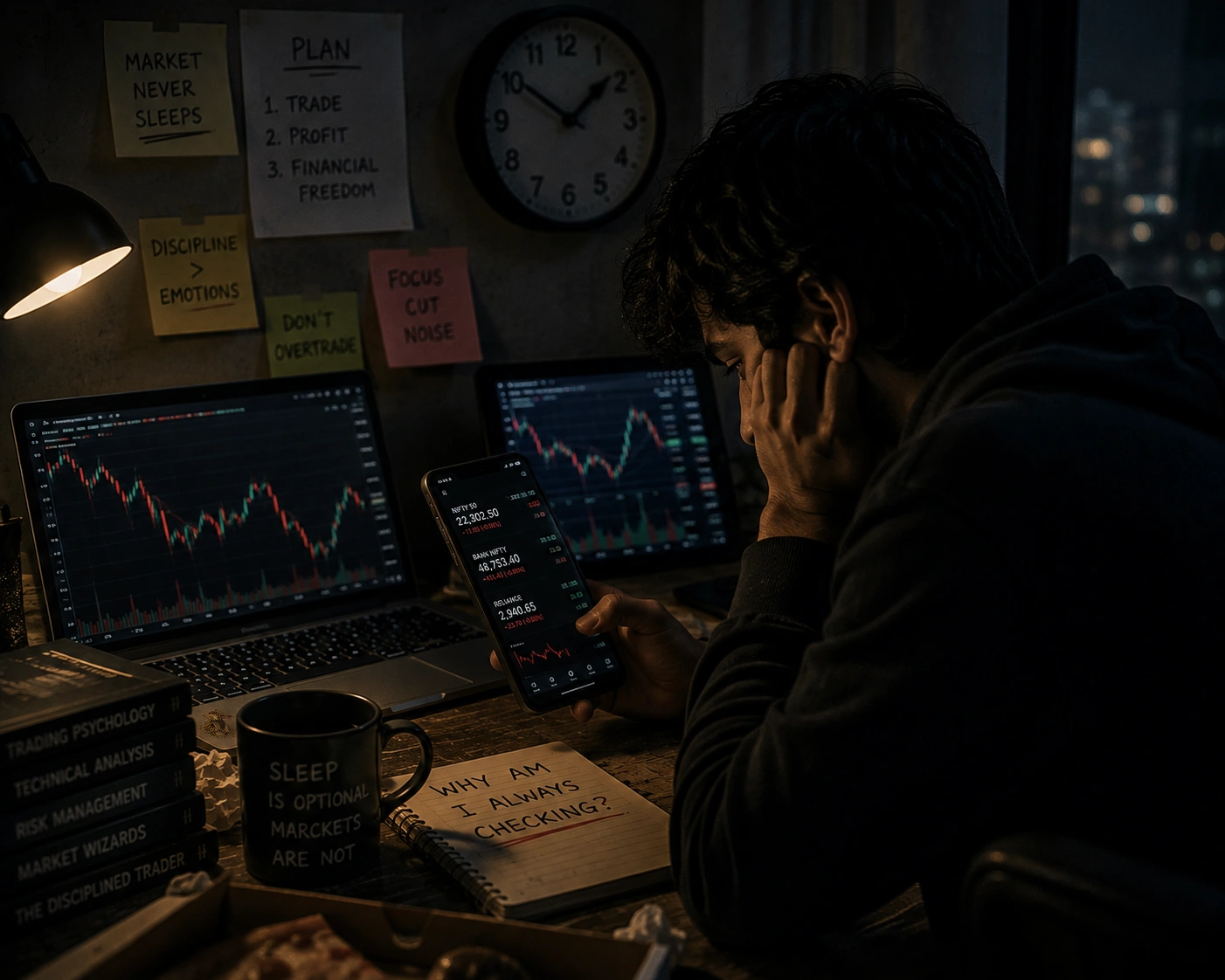
The Habit You Can't Stop
You wake up. Before you brush your teeth, before you check your phone for messages, before you do anything else — you check your portfolio. The numbers are green. You feel relief. The numbers are red. You feel dread. Either way, you've already started your day with an emotional spike that has nothing to do with your actual life.
This is compulsive stock checking. And it's more common than you think.
How It Starts
Nobody decides to check stock prices compulsively. It begins innocently:
The first check You check once to see how your investment is doing. The information is useful. It takes ten seconds. No harm done.
The second check A few hours later, you check again. Just curious. The market moved. You note it. Still fine.
The pattern forms You start checking at regular intervals. Before lunch. After lunch. Before bed. The checks become routine. The routine becomes automatic.
The compulsion takes over Now you check without thinking. In meetings. During conversations. While eating. The urge to check appears and you respond without questioning it. The habit has become a compulsion.
Why Your Brain Does This
The checking isn't random. It's driven by neuroscience:
Dopamine and uncertainty Your brain releases dopamine not just in response to rewards, but in anticipation of them. The uncertainty of what the market is doing creates a dopamine craving that checking temporarily satisfies.
Variable reinforcement Sometimes the market is up. Sometimes it's down. Sometimes it's flat. This unpredictability is the same mechanism that makes gambling addictive. The variable outcome keeps you coming back.
Loss aversion Checking isn't just about finding gains. It's about confirming losses aren't worse than you feared. The relief of "it's not as bad as I thought" is a powerful motivator.
Anxiety management The checking becomes a way to manage anxiety. If you know the number, you feel in control. The irony is that checking increases anxiety rather than reducing it.
What It Costs
Compulsive checking seems harmless. It's not:
Attention fragmentation Every check breaks your concentration. Studies show it takes 23 minutes to refocus after an interruption. If you check ten times a day, you've lost nearly four hours of productive focus.
Emotional volatility The constant emotional spikes — relief, dread, excitement, fear — create a baseline of anxiety that affects everything else. You're not just checking stocks. You're checking your emotional equilibrium.
Relationship damage When you're checking your phone during conversations, you're communicating that the market is more important than the person in front of you. This erodes trust and connection.
Decision quality decline The more you check, the more you react. The more you react, the worse your decisions become. Compulsive checking leads to impulsive trading, which leads to losses.
Breaking the Cycle
You can't eliminate the urge. But you can change your response:
Set specific check times Decide in advance when you'll check. Once at market close. Maybe once mid-day. Stick to the schedule. The structure reduces the compulsion.
Remove easy access Delete trading apps from your phone's home screen. Log out of accounts after checking. Make the act of checking require effort. Friction is your friend.
Replace the behavior When the urge to check appears, do something else instead. Walk. Stretch. Drink water. The replacement doesn't have to be productive — it just has to be different.
Track the urge Notice when the urge appears. What triggered it? Boredom? Anxiety? A specific time of day? Awareness of the pattern is the first step to changing it.
Accept the discomfort The urge to check will be uncomfortable. Sit with it. The discomfort passes. Every time you resist the urge, you weaken the compulsion.
The Market Will Still Be There
The market doesn't need your constant attention. It'll be there in an hour, tomorrow, next week. Your obsession with monitoring it doesn't protect you — it just prevents you from living.
The healthiest relationship with markets is one where you engage intentionally, not compulsively. Where you check because you need information, not because your brain demands a dopamine hit.
Compulsive checking carries a weight that's hard to explain. Artha is a space where you can talk about the obsession, the inability to stop, and the decision to change your relationship with markets.
Quick answers
Things people usually want to know.
Why do I check stock prices so often?
The brain's dopamine system responds to uncertain outcomes. Every time you check prices, there's a chance of a positive surprise. This intermittent reinforcement creates a compulsive loop similar to slot machines. The checking becomes automatic, not intentional.
How often is too often to check stock prices?
If you're checking more than once or twice a day for non-professional reasons, it's likely excessive. If checking disrupts your work, relationships, or sleep, it's definitely too much. Professional traders have structured times for monitoring; compulsive checkers don't.
Is checking stocks a sign of trading addiction?
It can be. Compulsive checking is one of the early signs of problematic trading behavior. It doesn't necessarily mean addiction, but it's a red flag that warrants examination of your relationship with markets.
How do I reduce compulsive stock checking?
Remove trading apps from your phone's home screen. Set specific times for checking (e.g., once at market close). Use website blockers during work hours. Fill the urge with a replacement activity. Start with small reductions and build from there.
Does constant monitoring improve returns?
No. Research consistently shows that more frequent monitoring leads to worse decisions. It increases emotional reactions to short-term noise and reduces the likelihood of holding winning positions. Less monitoring typically produces better outcomes.